
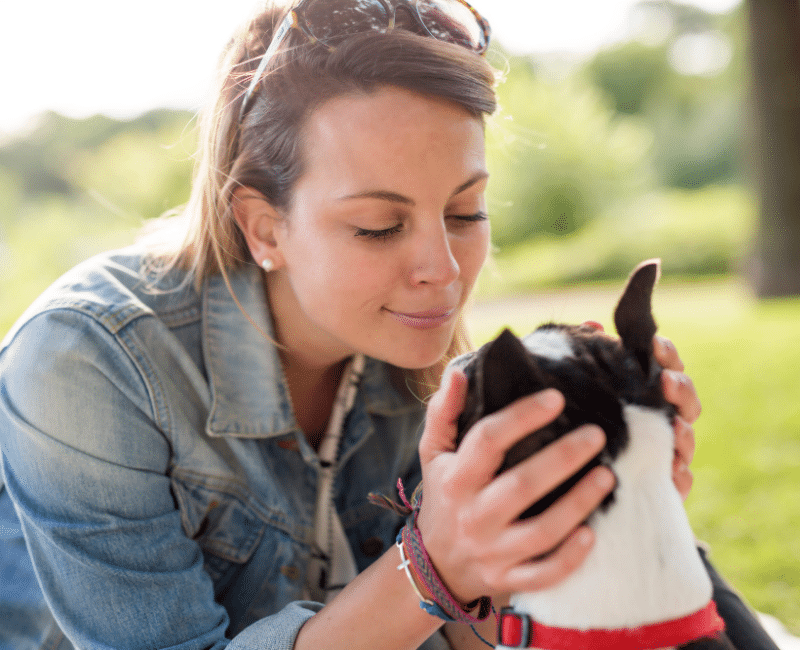
Burnout has become one of the most talked-about mental health concerns of the past decade. The World Health Organization defines burnout as heightened workplace stress marked by exhaustion, cynicism, and reduced professional effectiveness. While therapy, medication, and lifestyle changes remain frontline interventions, a growing body of scientific research points to an unexpected source of relief: the daily act of caring for a pet. From lowering stress hormones to restoring a sense of routine, the evidence suggests that animal companionship offers measurable psychological and physiological benefits for people running on empty.
How Pet Interaction Affects Stress Hormones
One of the strongest pieces of evidence linking pet care to burnout reduction comes from research on cortisol, the hormone most closely associated with chronic stress. A 2019 randomized controlled trial at Washington State University divided 249 college students into four groups and measured their salivary cortisol at multiple points throughout the day. Students who spent just 10 minutes petting cats and dogs showed a significant drop in cortisol compared to those who only watched others interact with the animals, viewed photos of animals, or waited with no stimulation at all (Pendry & Vandagriff, 2019). This was the first study to demonstrate that kind of hormonal reduction during a real-world interaction rather than in a controlled lab environment.
The implications for burnout are straightforward. Elevated cortisol is both a symptom and a driver of chronic stress. When cortisol stays high over extended periods, it disrupts sleep, weakens immune function, and compounds emotional exhaustion. A brief, repeatable activity that reliably brings cortisol down is exactly the type of intervention that fits into a burned-out person’s day, especially because it requires no scheduling, no appointments, and no effort beyond being present with an animal.
The Neurochemistry of Bonding With a Dog
Beyond cortisol reduction, interacting with a dog activates the brain’s bonding circuitry. A landmark 2015 study published in Science revealed that when dogs and their owners gazed at each other, they experienced a mutual increase in oxytocin, the neuropeptide responsible for feelings of trust, attachment, and emotional safety (Nagasawa et al., 2015). This feedback loop mirrors the same oxytocin exchange observed between human mothers and their infants, and it was notably absent when researchers tested the same setup with wolves and their handlers. The finding suggests that dogs have evolved alongside humans in a way that uniquely activates our neurochemical reward systems.
For someone experiencing burnout, this is significant. Burnout erodes a person’s sense of connection and emotional responsiveness, often making interpersonal relationships feel draining rather than nourishing. The oxytocin response triggered by a dog does not require conversation, reciprocity, or social performance. It happens through simple eye contact and physical closeness, making it accessible even during periods of deep emotional fatigue.
How Pets Restore Routine and Structure
One of the most debilitating features of burnout is the loss of motivation and daily structure. When exhaustion takes over, basic routines collapse, and the absence of structure feeds further into feelings of helplessness. Mental health professionals frequently emphasize the importance of routine as a stabilizing force for emotional well-being, and pets naturally create that framework.
A 2016 qualitative study by Brooks et al. interviewed 54 people diagnosed with long-term mental health conditions and found that pets provided what the researchers called “ontological security,” a stable sense of order and purpose rooted in caregiving routines like feeding, walking, and grooming (Brooks et al., 2016). Participants described their animals as the reason they got out of bed on their worst days. The structure was not imposed externally by a therapist or employer but emerged organically from the animal’s needs.
This is especially important for people whose burnout has led to depression or anxiety, conditions that thrive in the absence of predictable daily rhythms. A pet that needs to be fed at the same time every morning or walked every evening creates gentle, consistent accountability. Over time, this accountability can become a scaffold for rebuilding other routines that burnout has disrupted, from regular meals to consistent sleep schedules.
This is why breed selection is highly relevant. Certain dogs are especially well-suited to people who need companionship without overwhelming physical demands. Miniature Toy Poodles, for example, are intelligent, hypoallergenic, and adaptable to apartment living, making them a practical fit for individuals whose energy levels fluctuate. Prospective owners looking for a breed that balances affection with manageability can explore options from HonestPet’s trusted breeders to find a companion that matches their lifestyle and emotional needs.
Physical Activity and Cardiovascular Protection
Pet ownership, particularly dog ownership, has been linked to meaningful improvements in physical health markers. A 2013 American Heart Association Scientific Statement reviewed the available evidence and concluded that dog ownership is associated with more physical activity, lower blood pressure, and diminished sympathetic responses to stress (Levine et al., 2013).
The link between mental health and physical activity is well established. Regular movement, even moderate walking, stimulates the release of endorphins and serotonin, both of which counteract the neurochemical profile of burnout. For someone who has lost the motivation to exercise, a dog that needs a daily walk creates a built-in reason to move.
Reduced Isolation and Stronger Social Connections
Burnout often leads to social withdrawal. The emotional depletion makes maintaining relationships feel like another task on an already impossible list. A 2022 systematic review of 24 studies found that pet ownership resulted in lower levels of social isolation among adults, with the connection strengthening during and after the COVID-19 pandemic (Kretzler et al., 2022). Pets serve as natural social bridges as well. Dog owners encounter neighbors on walks, exchange greetings at parks, and participate in community spaces they might otherwise avoid.
Pets as Part of a Broader Mental Health Strategy
The research is encouraging, but it comes with an important caveat. Pets cannot replace professional mental health support. They work best as one component of a broader strategy that might include therapy, medication, stress management techniques, and workplace boundary-setting. A pet can lower cortisol, restore routine, encourage movement, and reduce isolation, but it cannot address the systemic causes of burnout or provide the kind of structured therapeutic guidance that a licensed counselor can.
References
● Brooks, H., Rushton, K., Walker, S., Lovell, K., & Rogers, A. (2016). Ontological security and connectivity provided by pets: A study in the self-management of the everyday lives of people diagnosed with a long-term mental health condition. BMC Psychiatry, 16, 409.
● Kretzler, B., König, H. H., & Hajek, A. (2022). Pet ownership, loneliness, and social isolation: A systematic review. Social Psychiatry and Psychiatric Epidemiology, 57(10), 1935–1957.
● Levine, G. N., Allen, K., Braun, L. T., Christian, H. E., Friedmann, E., Taubert, K. A., Thomas, S. A., Wells, D. L., & Lange, R. A. (2013). Pet ownership and cardiovascular risk: A scientific statement from the American Heart Association. Circulation, 127(23), 2353–2363.
● Nagasawa, M., Mitsui, S., En, S., Ohtani, N., Ohta, M., Sakuma, Y., Onaka, T., Mogi, K., & Kikusui, T. (2015). Oxytocin-gaze positive loop and the coevolution of human-dog bonds. Science, 348(6232), 333–336. https://pubmed.ncbi.nlm.nih.gov/25883356/
● Pendry, P., & Vandagriff, J. L. (2019). Animal visitation program (AVP) reduces cortisol levels of university students: A randomized controlled trial. AERA Open, 5(2).