In healthcare, every second counts—whether you’re reviving a patient whose heart has stopped or helping a colleague through a mental health crisis. Traditionally, most training for healthcare professionals focuses on physical emergencies. Skills like CPR (Cardiopulmonary Resuscitation) and AED use are taught early and reinforced regularly. But in today’s healthcare environment, one thing is becoming clear: knowing how to save a life also means knowing how to support mental well-being.
Across hospitals, clinics, and even home healthcare settings, providers are encountering rising rates of stress, burnout, and mental health crises—both in patients and among staff. This has created a pressing need for healthcare professionals to be equipped not only with advanced CPR techniques but also with mental health first aid (MHFA) skills. The combination is powerful: physical first aid keeps the body alive, mental health first aid helps keep the mind strong.
The High-Stress Reality of Healthcare Work
Healthcare providers often face high-pressure situations, long shifts, and emotional strain. According to the World Health Organization (WHO), burnout among healthcare workers reached unprecedented levels after the COVID-19 pandemic, with consequences including reduced job satisfaction, lower quality of care, and increased turnover.
These challenges aren’t only affecting providers’ own mental health—they also impact patient outcomes. A nurse who recognizes early signs of distress in a patient can prevent a mental health episode from escalating. Similarly, a doctor who responds calmly and skillfully during cardiac arrest can improve survival rates.
In short, the modern healthcare provider needs to be skilled in both physical and psychological crisis response.
Why Mental Health Training Is Essential for Providers
While healthcare professionals receive extensive medical training, mental health crisis response often receives less focus. Yet, in daily practice, providers regularly encounter patients struggling with anxiety, depression, suicidal thoughts, and even acute psychotic episodes.
Mental health training for healthcare providers can help by:
- Teaching how to identify early warning signs of emotional distress.
- Providing strategies to de-escalate tense situations.
- Offering clear protocols for referring patients to specialized mental health care.
- Reducing stigma within the healthcare team about discussing mental health.
This isn’t just about patients—mental health training also helps providers look after themselves and support colleagues. Peer-to-peer mental health support has become a cornerstone in many hospitals for preventing burnout and compassion fatigue.
The Role of CPR in Saving Lives
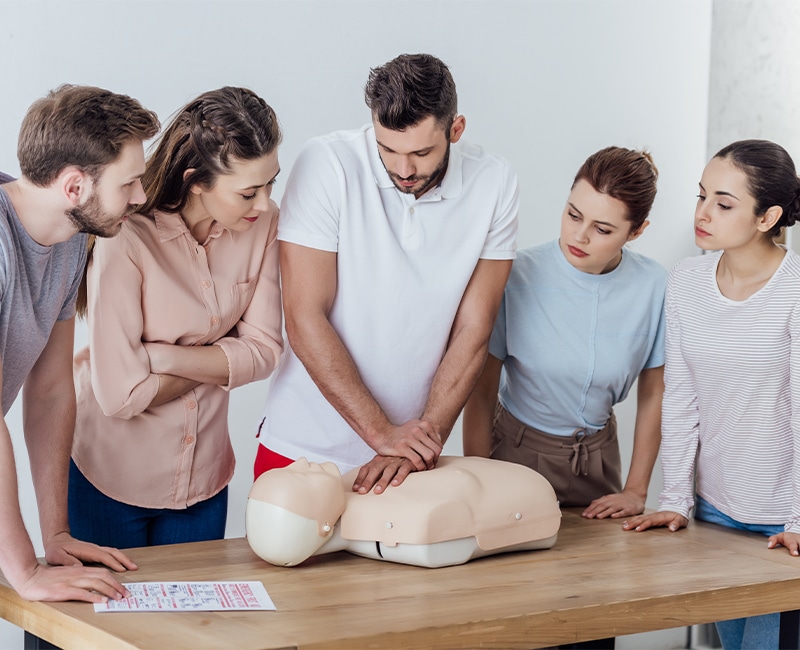
CPR is one of the most fundamental and widely used life-saving skills in healthcare. For providers, a Healthcare Provider CPR Course typically covers:
- High-quality chest compressions for adults, children, and infants.
- Proper use of automated external defibrillators (AEDs).
- Rescue breathing and advanced airway management.
- Coordinating as part of a resuscitation team.
The American Heart Association (AHA) emphasizes that quick, effective CPR can double or triple the chances of survival after cardiac arrest. For healthcare providers, the standard of care is even higher—they are expected to perform CPR with precision, speed, and coordination with
How Mental Health Training and CPR Skills Intersect
At first glance, mental health training and CPR might seem unrelated. One deals with the mind, the other with the heart and lungs. But in practice, they often intersect.
Examples include:
- A patient experiencing severe panic may hyperventilate and faint, requiring immediate physical first aid.
- Someone recovering from a cardiac event may face depression, anxiety, or post-traumatic stress that needs psychological support.
- In emergencies, family members or bystanders can go into shock, panic, or emotional breakdown—providers must calm them while treating the patient.
In these moments, providers need to address both the body’s immediate survival needs and the mind’s emotional state—sometimes at the exact same time.
What a Combined Training Approach Looks Like
Forward-thinking hospitals and training institutions are beginning to offer blended programs that pair Healthcare Provider CPR certification with mental health first aid training.
A combined curriculum might include:
1. Advanced CPR and AED Use – Practicing skills for various patient groups and integrating them into real-world emergency simulations.
2. Recognizing Mental Distress in Emergencies – Understanding body language, speech patterns, and behaviors that signal mental health challenges.
3. Crisis Communication – Learning how to deliver life-saving instructions while calming anxious or panicked individuals.
4. Post-Emergency Care – Supporting patients and families emotionally after a medical crisis.
This approach not only improves immediate outcomes but also builds trust and rapport between providers and patients.
Real-Life Scenario
Consider this example:
A 55-year-old patient collapses in a hospital lobby from sudden cardiac arrest. A nurse trained in CPR starts compressions while a physician prepares the AED. Meanwhile, the patient’s spouse begins hyperventilating and panicking, screaming for help. A second nurse, trained in mental health first aid, approaches the spouse, speaks in a calm voice, and helps them focus on breathing until they are steady enough to answer questions.
In this case, the CPR saved the patient’s life, and the mental health intervention prevented an additional medical emergency from developing.
Benefits for Healthcare Organizations
Hospitals and clinics that prioritize both mental health training and CPR for staff often report:
- Improved patient safety and satisfaction
- Lower staff burnout rates
- Better teamwork and communication in high-pressure situations
- Enhanced reputation for compassionate, holistic care
In competitive healthcare markets, these factors can set an organization apart—not only attracting patients but also retaining skilled staff.
Getting Certified in Both
Healthcare providers in the U.S. can pursue:
- American Heart Association BLS (Basic Life Support) for Healthcare Providers – Covers high-performance CPR and AED use in medical settings.
- Mental Health First Aid USA – Teaches recognition and response for common mental health issues and crises.
Many providers schedule both certifications within the same year, ensuring their skills remain current. Online and blended learning formats make it easier to balance training with clinical schedules.
Final Thoughts
The healthcare provider of the future will not be defined solely by technical medical skill. They will also be recognized for their ability to connect with patients, understand emotional needs, and respond to mental health crises as readily as physical ones.
By pairing mental health training with CPR certification, providers become more than just responders—they become complete caregivers, capable of saving lives in every sense of the word.
The takeaway is simple: in healthcare, the heart and the mind are deeply connected. To truly save lives, we must care for both.