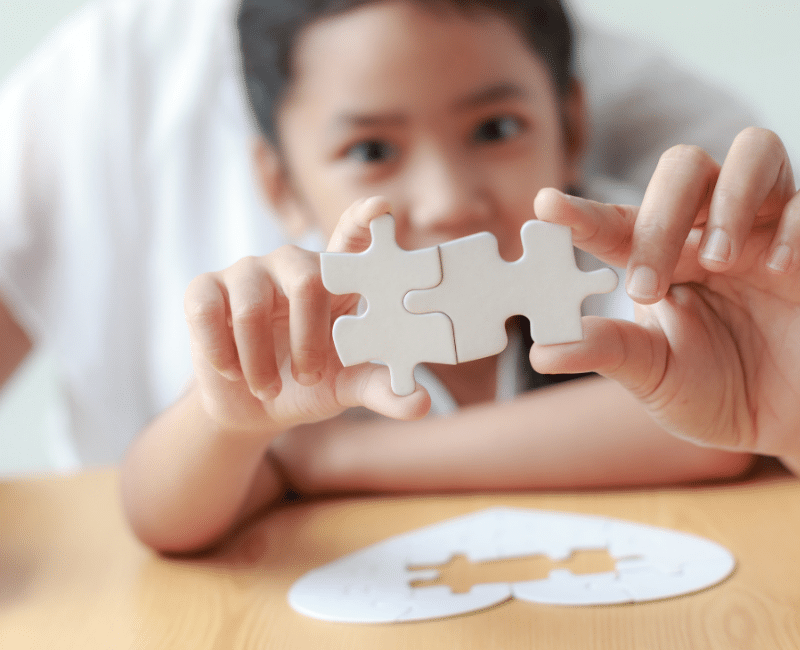
The pieces feel different in your hands when they mean something. Not just any photograph cut into a puzzle, but your photograph. Your child’s laugh, captured mid-joy; the garden your parents tended for forty years; that sunset from the trip that changed everything. When you work on a puzzle like this, something shifts. The activity becomes more than entertainment. It becomes time spent with what matters most.
Personalized jigsaw puzzles occupy a unique space between craft and reflection, between mental exercise and emotional nourishment. They ask your brain to work while giving your heart space to remember.
Why Puzzles Calm Busy Minds
Ask anyone who puzzles regularly, and they’ll tell you: there’s something about sorting pieces, finding connections, watching an image take shape that quiets mental noise in ways few other activities can match.
Science backs up this feeling. Research published in Frontiers in Aging Neuroscience demonstrates that puzzle-solving engages your brain across multiple systems at once: visual perception, spatial reasoning, memory, and problem-solving. This comprehensive activation explains why puzzles feel so absorbing. Your mind doesn’t have room for anxious loops or racing thoughts when it’s fully engaged in pattern recognition and spatial challenges.
The study also revealed that people who’ve puzzled consistently throughout their lives show better cognitive function as they age. While a single puzzle won’t transform your brain, making puzzling a regular practice appears to support long-term mental sharpness. It’s less about dramatic intervention and more about consistent, enjoyable engagement.
Mental health experts acknowledge that while puzzles alone won’t prevent conditions like dementia, they contribute meaningfully to overall brain health when combined with physical activity, social connection, and other wellness practices. Think of puzzling as one thread in a larger fabric of self-care.
For people managing anxiety, depression, or simply overwhelming stress, puzzles offer concrete progress in a world that often feels uncertain. Each piece that finds its place provides tangible evidence of moving forward. That visibility matters when so much of emotional healing happens invisibly, slowly, without clear markers.
Memories That Come Alive Again
Here’s where personalized puzzles reveal their deeper value. Psychologists have spent years studying nostalgia, and their findings reshape how we think about memory’s role in mental health.
Research from the University of Southampton shows that engaging with positive memories does far more than provide fleeting comfort. Nostalgia actively strengthens psychological resilience. It enhances mood, deepens social connectedness, reinforces a sense of life’s meaning, and boosts optimism about what’s ahead. When you spend time with good memories, you’re not escaping the present; you’re fortifying yourself for it.
A personalized puzzle transforms this psychological principle into hours of hands-on practice. As you work on a puzzle featuring your grandmother’s smile, your daughter’s graduation, or the home where you grew up, you’re not just glancing at a photo. You’re studying it. Really seeing it. Noticing the wrinkle near your grandmother’s eyes that appeared when she laughed. The nervous pride in your daughter’s expression. The particular way afternoon light fell through that kitchen window.
Studies in ScienceDirect confirm that nostalgic memories involving close relationships particularly enhance feelings of connection and social support. Even when you’re puzzling alone, working with images of people you love creates a sense of emotional closeness. For those separated by distance, loss, or life circumstances, this matters more than it might seem.
The Difference Quality Makes
Materials matter, especially when the goal extends beyond simple entertainment. Wooden puzzles crafted from quality wood bring something cardboard can’t replicate: substance. The pieces have real weight in your hands. The wood grain catches the light. When two pieces fit together, you feel it through your fingertips. This tactile engagement adds another dimension to the experience.
When those wooden pieces form an image that holds personal meaning, you’re working with something that honors both the memory and the moment. The quality of the puzzle reflects the value of what it depicts. This isn’t about luxury for its own sake; it’s about creating an experience worthy of the time you’re spending together.
Shared Spaces, Shared Stories
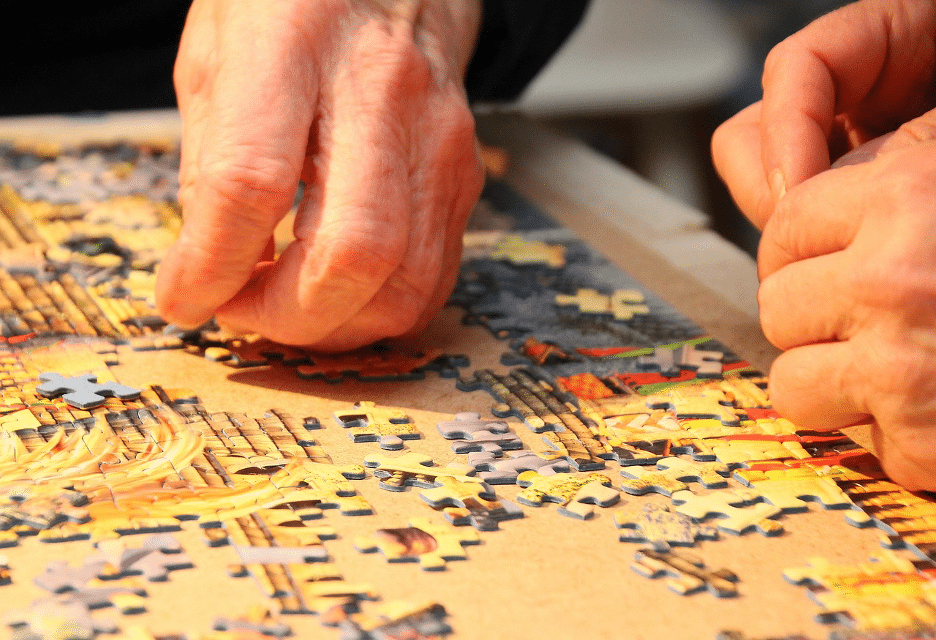
Some puzzle moments happen in solitude, but some of the most meaningful occur in company. A puzzle spread across a table becomes an invitation. Family members pause, pick up a piece, and discover they’ve stayed for an hour. Conversation flows naturally, or comfortable silence settles in. Both feel right when you’re puzzling together.
Research consistently shows that social connection profoundly impacts mental well-being, particularly as we age. Shared activities that don’t require constant interaction offer especially accessible ways to be together, valuable for people who find sustained conversation tiring or awkward.
Even for those puzzling alone, there’s something comforting about spending focused hours with images of people and places that represent love, safety, and belonging. It’s not the same as being together, but it’s close.
Making Room for What Matters
The best self-care practices don’t feel like obligations; they feel like small acts of kindness toward yourself. Setting up a puzzle in good light, choosing an image that brings genuine joy or peace, spending unhurried time watching it take shape piece by piece; these simple acts signal that your well-being matters, that taking time for reflection and calm isn’t selfish but necessary.
Choose complexity that engages without frustrating. If you’re puzzling for stress relief, you want absorption, not aggravation. Select images that genuinely comfort you, whether recent joy or older memories from times you felt secure. Create a dedicated space, even a corner of a table, that becomes your puzzle place.
These small choices transform puzzling from time-filling into intentional practice. Not therapy, not medicine, but something valuable in its own right: focused time with your own mind, your own memories, at your own pace.
When Words Aren’t Enough
Finding the right gift for someone in pain, someone grieving, someone recovering, or someone struggling feels nearly impossible. You want to help without intruding, to acknowledge their difficulty without minimizing it, to offer comfort without presuming to understand what they need.
A personalized puzzle can speak when words fall short. It says: “I see you carrying something heavy. Here’s something gentle. Here’s time with people you love, with moments that brought you joy, with connections that endure despite everything.”
There’s no pressure in giving a puzzle. No timeline, no expectation, no “right way” to use it. The recipient can work on it when they need that particular kind of calm focus, that bridge between present and past, that sense of slowly making something whole again, piece by piece, at their own pace.
For elderly parents feeling isolated, a puzzle featuring children and grandchildren becomes both an occupation and a connection. For someone grieving, images from happier times offer gentle company through difficult days. For anyone overwhelmed by life’s demands, a personalized puzzle provides permission to pause, remember, and simply be.
Something Worth Holding Onto
Mental health is complex, and support comes in many forms. Professional care has its essential place. So do medication, therapy, community, and countless other interventions and practices. Personalized puzzles don’t replace any of that.
What they offer is something quieter but genuine: a way to engage your mind while honoring your heart. Hours spent with quality wooden pieces in your hands, watching meaningful images emerge, perhaps sharing the experience with someone you love: these hours have value. They’re hours of presence in a distracted world, hours of connection in fragmented times, hours spent with your own story and the people who’ve shaped it.
Ready to create your own meaningful practice? Explore personalized wooden puzzles and discover how your most cherished memories can become tangible.