

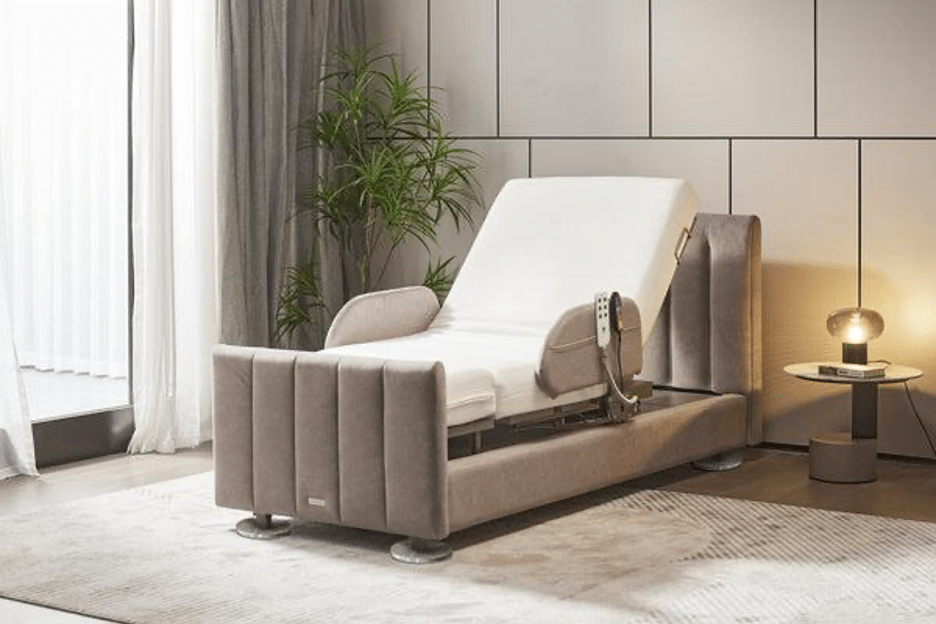
Recovery at home is not shaped by one item, one room, or one decision. It is shaped by the full environment: how easily your loved one can move, how much effort basic tasks require, whether you can help without strain, and whether the space feels steady rather than chaotic.
That matters because a recovery setting is never only physical. It affects confidence, energy, sleep, privacy, stress, and the emotional tone of the entire household. For families trying to support an older adult or someone with significant mobility limitations, a healing environment is really a low-friction environment.
In practical terms, that means looking closely at circulation paths, lighting, bathroom access, seating height, and bed setup. In many homes, a rotating hospital bed becomes part of that conversation because it can help bridge the gap between lying down, sitting upright, and getting ready to transfer without making every movement a full-body project.
Why the Home Environment Matters More Than Many Families Expect
When you’re thinking about recovery, it’s easy to focus on diagnoses, appointments, or medication schedules. Those things matter, but the built environment affects what daily life actually feels like between appointments. A space that is hard to navigate can quietly increase fatigue, frustration, and dependence.
This is especially relevant for older adults. According to the CDC’s older adult falls data, more than 1 in 4 older adults fall each year, and a single fall doubles the chance of falling again. The agency also notes that falls among older adults result in about 3 million emergency department visits annually. In plain English, the home environment is not a side issue. It is a front-line safety issue.
For your family, that changes the planning lens. The goal is not to make the home look clinical. The goal is to remove avoidable strain points so the home supports stability, dignity, and smoother routines.
A Healing Environment Reduces Friction
A good recovery setup reduces the number of awkward, risky, or exhausting moments in the day. That includes getting in and out of bed, moving to the bathroom, dressing, sitting for meals, and reaching essential items without twisting, stretching, or stumbling.
The National Institute on Aging’s room-by-room home safety guidance recommends practical measures such as keeping light switches close to the bed, placing a charged phone nearby, storing frequently used items within easy reach, and keeping cords and furniture out of walking paths. Those are simple steps, but together they form the operating system of a safer room.
Start With the Bedroom, Because It Sets the Tone for the Day
The bedroom is often the most important recovery zone in the house. It is where your loved one begins and ends the day, manages rest, reposition, receives assistance, and prepares for transfers. If the bedroom is poorly set up, the strain compounds quickly.
As Forbes notes, home modifications are about adapting the space to remain safe and manageable despite physical limitations, with common updates including grab bars, curbless showers, and raised toilets. That same principle applies in the bedroom: the room should work with your loved one, not against them.
What to Look For Around the Bed
A recovery-supportive bedroom usually benefits from:
● Clear space on both sides of the bed where possible
● Lighting that is easy to access at night
● A chair or support surface at the right height
● a direct, obstacle-free path to the bathroom
● Enough room for you to assist without twisting or overreaching
If transfers are difficult, bed function becomes more than a comfort feature. It becomes part of the daily workflow.
Bathroom Access Is Often Where Safety Breaks Down
A home can feel manageable until the bathroom routine becomes difficult. Wet surfaces, narrow clearances, fatigue, urgency, and poor transfer mechanics can turn a normal task into a stressful one.
The National Council on Aging’s home safety modification advice reports that over half of all falls occur at home and recommends practical changes such as installing a shower seat, adding grab bars, improving lighting, clearing clutter, and keeping commonly used items between waist and shoulder height. That is the kind of boring, unglamorous advice that saves people from very expensive problems.
Design for Predictability, Not Just Accessibility
A healing bathroom setup should make each step predictable. Can your loved one approach the toilet safely? Is there stable support nearby? Is the route well-lit at night? Are towels, supplies, and clothing positioned so no one has to improvise mid-task?
Predictability lowers stress for both your loved one recovering and you as the caregiver. That matters more than many families realize, because the caregiving burden is shaped not only by medical complexity but also by the practical demands of care and the emotional toll it takes. A peer-reviewed review of family caregiving for older adults makes that point clearly: effective support addresses both the practical aspects of care and the emotional impact on caregivers.
Healing Spaces Should Support Independence Without Forcing It
There is a difference between supporting independence and demanding it. A supportive environment gives your loved one choices and reduces the energy cost of everyday actions. A poorly designed environment forces them to struggle through avoidable barriers just to prove they can still manage.
AARP’s HomeFit guidance makes the broader point well: much of America’s housing stock was not designed for older adults or people with disabilities, and homes often need practical adjustment to become a better fit. Its aging-in-place checklist also recommends no-step entry, clear walkways, and safe transition zones near entrances.
That same principle applies indoors. A healing environment should allow your loved one to conserve effort for what matters, not waste it wrestling with furniture placement, awkward bed exits, or poorly arranged essentials.
What Families Should Prioritize First
If you are planning a recovery-friendly home, the first wins are usually operational:
● Simplify the route between the bed, bathroom, and seating
● Improve lighting, especially at night
● Remove rugs, cords, and unstable furniture from travel paths
● Place essentials within easy reach
● Choose equipment that reduces repeated lifting and awkward transfers
● Review whether the room layout works for both your loved one and you
That is the real shift. A healing environment is not just about what your loved one needs. It also needs to work for you.
Conclusion
Creating healing environments that support recovery is really about reducing avoidable difficulty. Safer layouts, better lighting, thoughtful bathroom planning, and smarter bed setup can make daily life more stable, more dignified, and less draining for everyone involved.
For families exploring mobility-focused home upgrades, it helps to think beyond the product and look at the full care pathway. The right environment does not just support recovery. It supports confidence, routine, and a more sustainable caregiving rhythm.
This article is for general information, not medical advice. Consult a qualified clinician or occupational therapist for personalized guidance.